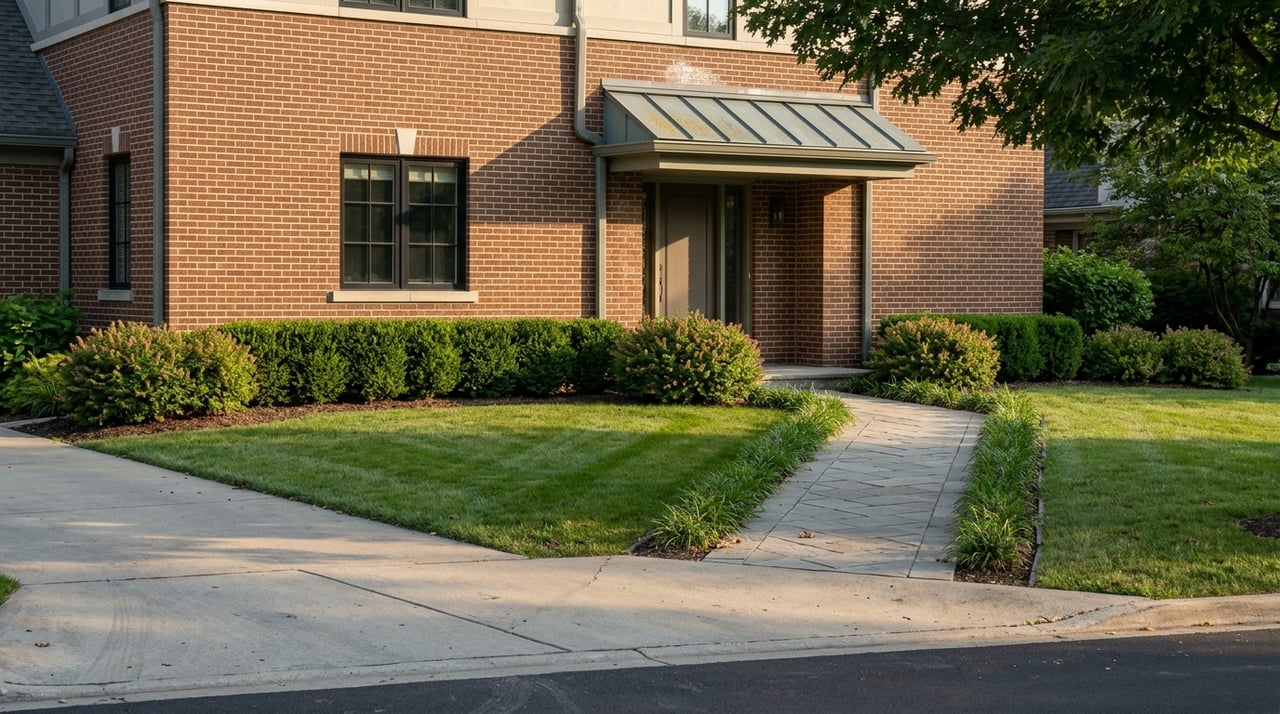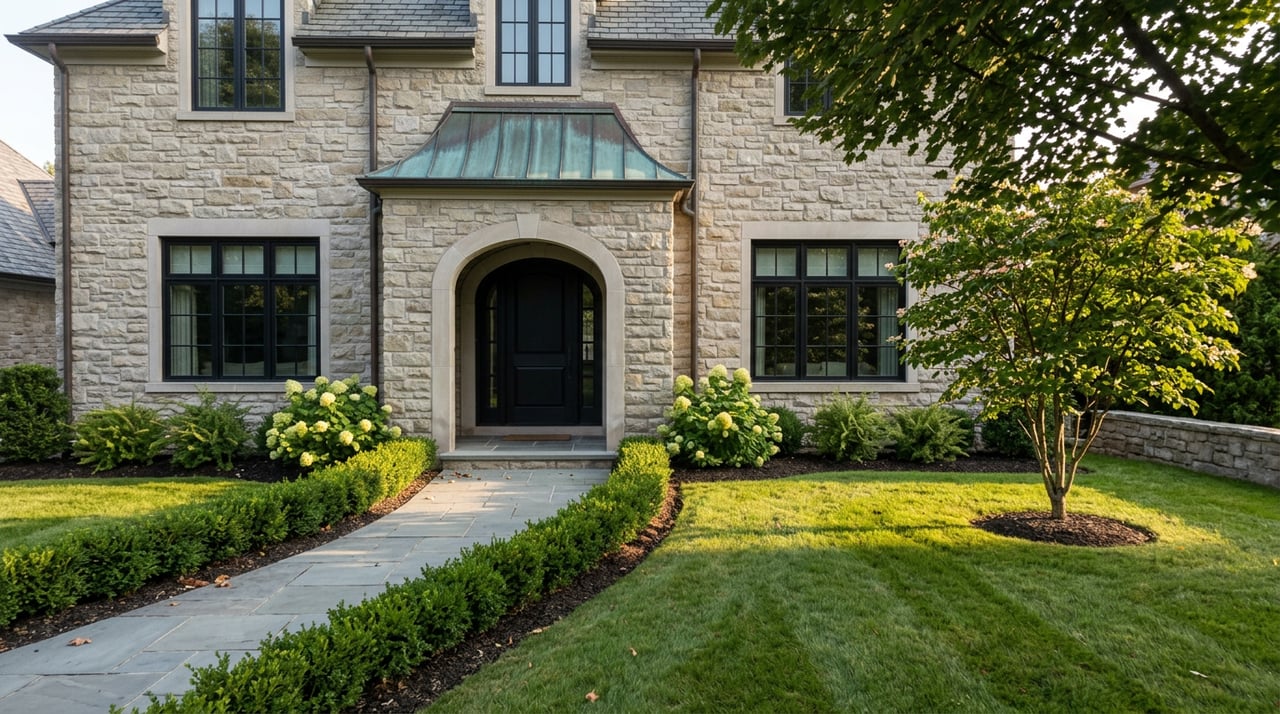
Picture two townhouses on the same block in downtown Leesburg. Same era, same brick, same distance from the courthouse. One owner wants to swap failing wood windows for something more energy efficient before listing. The other wants to do the identical project next door. On paper they look like twins. In practice, one might sail through a paperwork review in a matter of days. The other might need a hearing in front of a public board, a specific kind of window, and a wait that can stretch into next month.
That difference isn't about the houses. It's about which of Leesburg's overlapping historic designations actually applies to each address, and whether the town classifies that particular structure as contributing to the district's historic character or not. Sellers, and the agents helping them price a listing, routinely treat "historic district" as a single label. It isn't. It's at least three separate systems layered on top of each other, and knowing which one governs a given property changes the renovation timeline, the listing description, and in some cases whether a Certificate of Appropriateness is required at all.
Three Labels, Three Different Sets of Rules
Leesburg's downtown core sits inside overlapping designations that sound interchangeable and aren't. The town's own preservation staff draws a hard line between them.
| Designation | Triggers a Certificate of Appropriateness? | Who reviews it | Where it applies |
|---|---|---|---|
| H-1 Old & Historic District | Yes, for all exterior alterations, including in-kind replacement of the same material | Preservation staff (minor items) or the Board of Architectural Review (larger projects, public hearing required) | The locally mapped downtown overlay, defined by the Town's own zoning map |
| National Register / Virginia Landmarks Register | No, these carry no local regulatory authority on their own | National Park Service and the Virginia Department of Historic Resources, honorary designation only | A boundary that overlaps the H-1 district but does not match it exactly |
| Gateway District | Yes, but under separate and more flexible standards than H-1 | Board of Architectural Review | The approach corridors into downtown: King Street (Route 15), Market Street (Route 7), and Edwards Ferry Road |
The gap between the first two rows is the one that catches people off guard. A home can be listed on the National Register, can carry a plaque, can be genuinely old, and still fall entirely outside the H-1 overlay that actually triggers design review. The Town of Leesburg is explicit that the two boundaries differ and that the federal and state registers don't carry local regulatory weight by themselves. A buyer who assumes "on the National Register" means "will need Board approval to touch anything" may be wrong, and a buyer who assumes it means the opposite could be just as wrong on a different block.
Contributing and Non-Contributing Change the Calculus Again
Even inside the H-1 boundary, not every structure is treated the same way. The town classifies buildings as either contributing to the district's historic character or non-contributing. A non-contributing structure, typically a newer building or one that's lost its original historic fabric, gets reviewed under the guidelines' new construction chapter, which allows more flexibility with materials and design than a contributing building would receive. Two neighbors inside the same overlay, on the same street, can be working from two different rulebooks depending on that single classification.
For a seller, that distinction belongs in the listing conversation before a buyer's inspector or contractor discovers it mid-contract. For a buyer planning a renovation after closing, it's the difference between a straightforward permit process and a longer one built around period-appropriate materials.
The Board Is a Real, Active Body With Real Consequences
It would be easy to treat all of this as theoretical, a rule that exists on paper but rarely bites. It doesn't work that way. On August 4, 2026, Leesburg's Board of Architectural Review approved designs for a new mixed-use building at 206 East Market Street, on the site previously occupied by the Piano Company. The project comes from developer Kevin Ash, who also built the Hotel Burg complex on South King Street, and because the site's B-1 zoning permits the use by right, BAR review was the only local design hurdle standing between concept and construction, according to Loudoun Now's coverage of the approval. No Town Council hearing, no Planning Commission review. Just the Board, weighing height, massing, window arrangement, and roofline against the district's design guidelines.
That's the same board that reviews a homeowner's request to replace a porch railing or add a rear addition. It meets on a fixed schedule (regular business meetings on the third Wednesday of each month, work sessions on the first Monday as needed) and staff reports are typically posted the Thursday before a meeting, which is a useful marker for how far ahead an application needs to be in the queue. Smaller items like fences, paint colors, and landscape lighting can be cleared administratively by preservation staff without a hearing at all. Larger changes, like the Market Street redevelopment, go through the full public process. Knowing which bucket a project falls into before listing, or before making an offer contingent on renovation, is the practical takeaway.
Two Frictions That Live Outside the Historic Core
Downtown's overlay questions are not the only address-specific friction in a Leesburg transaction. Head west of Route 15 and the relevant paperwork changes entirely. A meaningful share of properties out there run on private well and septic rather than town water and sewer, which means Loudoun County Health Department documentation, well-flow testing, and septic pump-and-inspect scheduling become part of a normal pre-listing checklist, not an edge case.
In the opposite direction, newer master-planned communities such as Lansdowne on the Potomac carry a different kind of paperwork obligation. Virginia law requires sellers in a homeowners association or condo community to provide a resale certificate, and the association generally has 14 days after a written request to deliver it. Because buyers have cancellation rights tied to actually receiving that certificate, ordering it early in the process is what keeps a closing date from slipping.
None of these three frictions (historic district review, well and septic documentation, HOA resale certificates) apply to the same properties. A downtown Federal-style rowhouse, a five-acre parcel west of the Greenway, and a colonial in a golf-course community are all technically "Leesburg" listings, and each one is playing by a completely different procedural rulebook before it ever reaches a buyer's desk.
Why the Median Price Tells You Less Than It Seems To
That same address-by-address variation shows up in the market data too, and it's worth sitting with for a moment because it explains why headline numbers from different sources rarely agree. As of June 30, 2026, Zillow's home value index for the town overall put the average Leesburg home value at $756,483, with homes going to pending in around six days. Zillow's figure for one specific Leesburg zip code, updated the same date, showed a higher average value of $867,655 and a slightly longer nine days to pending. Same town, same data provider, different zip code, and the numbers move.
Separately, Redfin's tracking for March 2026 showed a median sale price of $695,000, down 6.1 percent year over year, with homes averaging 30 days on market and 40 homes sold that month. That's not a contradiction of Zillow's number. Zillow's figure is an estimated value paired with how fast a listing attracts an accepted offer. Redfin's figure is the median closed sale price, measured after a full contract-to-close cycle, and it's pulling from a different month and a different slice of inventory.
The practical lesson isn't which number is right. It's that a single portal's town-wide median tells you very little about what a specific downtown rowhouse, a specific Lansdowne colonial, or a specific well-and-septic estate west of town is actually worth or how long it will realistically take to sell. Pricing any of them well means pulling comparables from inside that property's actual submarket, adjusted for its specific procedural realities, not applying a citywide average to a market that is really several markets wearing one name.
A Few Questions Worth Asking Before You List or Offer
How do I find out which designation actually applies to my property? Preservation staff can confirm a property's status against the town's official maps, since the H-1 overlay and the National Register boundary are not identical and shouldn't be assumed to match. The Town of Leesburg's Old & Historic District page is the starting point, and staff can be reached directly for a property-specific answer.
Does non-contributing status hurt resale value? Not inherently. It changes the renovation process, not the underlying appeal of a location in the historic core. Buyers drawn to Old Town are generally there for the walkability and the character of the district as a whole, not for one structure's specific classification.
If I'm buying with plans to renovate, what should I check before writing an offer? Confirm which overlay applies, whether the structure is contributing or non-contributing, and whether the specific work you're planning (windows, roofing, an addition) needs a hearing or can be handled administratively. The Certificate of Appropriateness process page lays out which categories require which level of review.
What about properties outside the historic core? The same instinct applies. A well and septic system west of Route 15 or an HOA resale certificate in a planned community both have their own timelines, and both are worth confirming early rather than discovering mid-contract.
Leesburg rewards buyers and sellers who treat it as a set of distinct pockets rather than one market with one set of rules. If you're weighing a purchase or a sale anywhere in town, from a Federal rowhouse on Loudoun Street to a golf-course colonial in Lansdowne, Susan & Joe Team can walk through exactly which rulebook applies to your specific address before you list or write an offer. Start the conversation — connect with Susan & Joe.